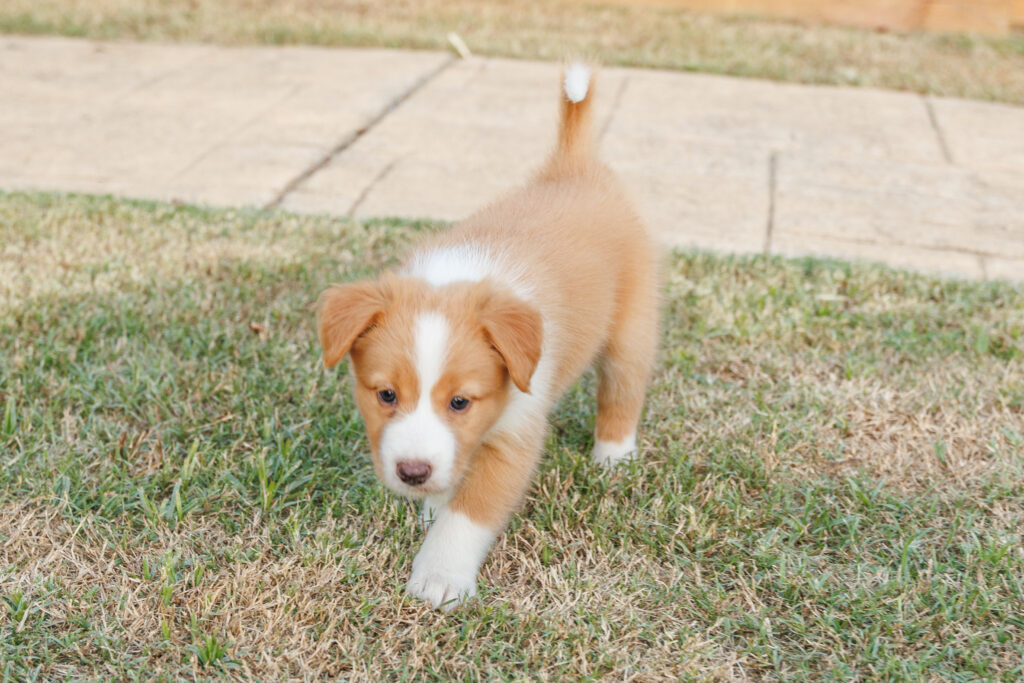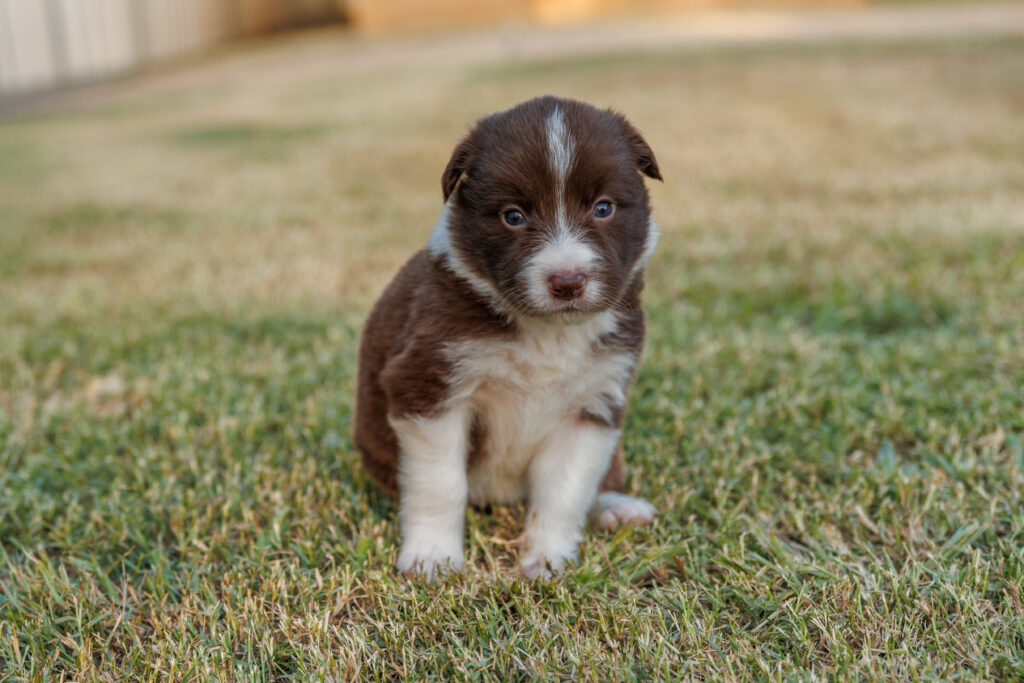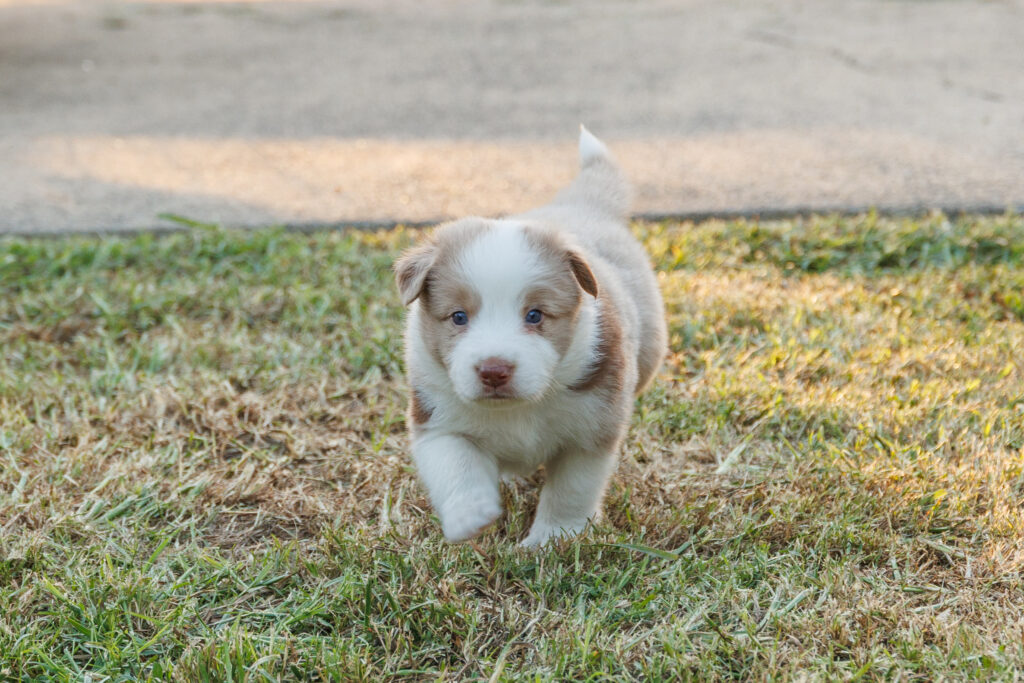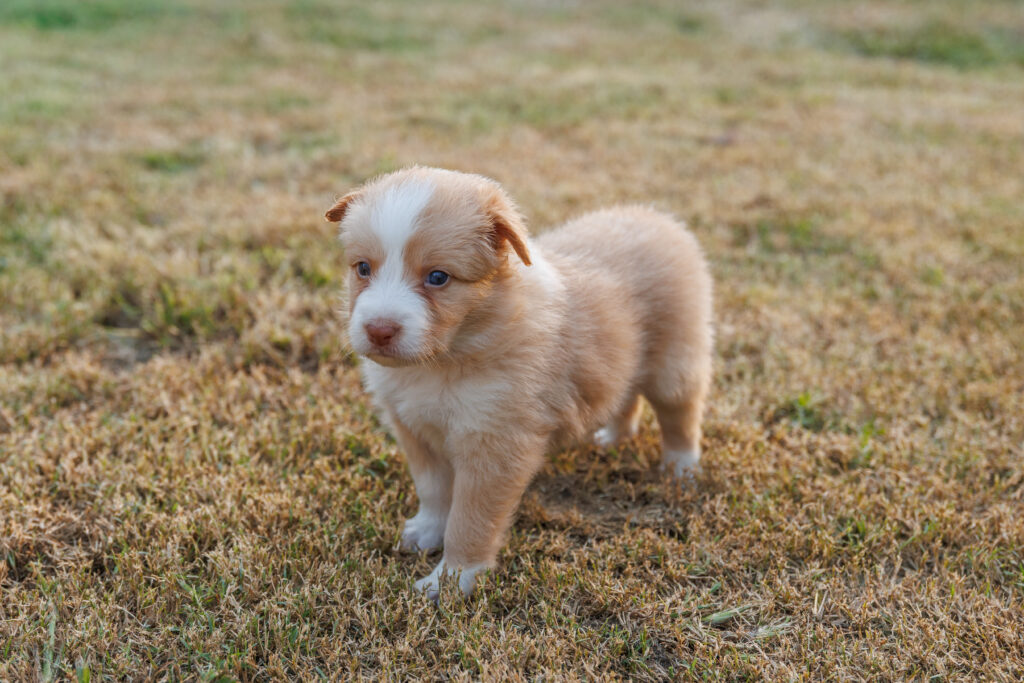
At Scenic Collies, genetic health and colour inheritance are carefully considered as part of a responsible and transparent breeding program. All breeding dogs undergo DNA testing through Orivet to support informed decision-making and long-term breed welfare.
This page provides clear information about how genetic testing, carrier status, and coat colour inheritance are managed within our program.
Genetic Colour vs Visual Colour
Coat colour in dogs is determined by genetics rather than appearance alone. A dog’s visible colour does not always reflect the full range of colour genes they carry.
Genetic colour refers to the genes a dog carries and can pass on to offspring, while visual colour refers only to what is seen externally. Some genes may be present without being visibly expressed.
- A dog may carry a colour gene without visually expressing it.
- Carried genes can be passed to puppies depending on the pairing.
- Genetic testing allows breeders to understand these possibilities in advance.
This is a normal and well-understood aspect of canine genetics. Responsible breeding does not aim to eliminate genetic diversity, but to understand and manage it appropriately through informed pairings.
Colour is part of what makes each puppy special — but it is never the goal.
Merle Pattern Disclaimer
Merle is a coat pattern that affects pigment distribution only and does not determine a dog’s base colour.
A dog may visually appear light, dark, or warm-toned while still being genetically black-based or red-based. Visual coat colour alone is not a reliable indicator of genetic colour inheritance.
All Scenic Collies breeding dogs are DNA tested, and merle pairings are planned carefully to prioritise health, clarity, and responsible breeding practices. Double-merle pairings are never undertaken.
Examples of Visual Colour vs Genetic Colour
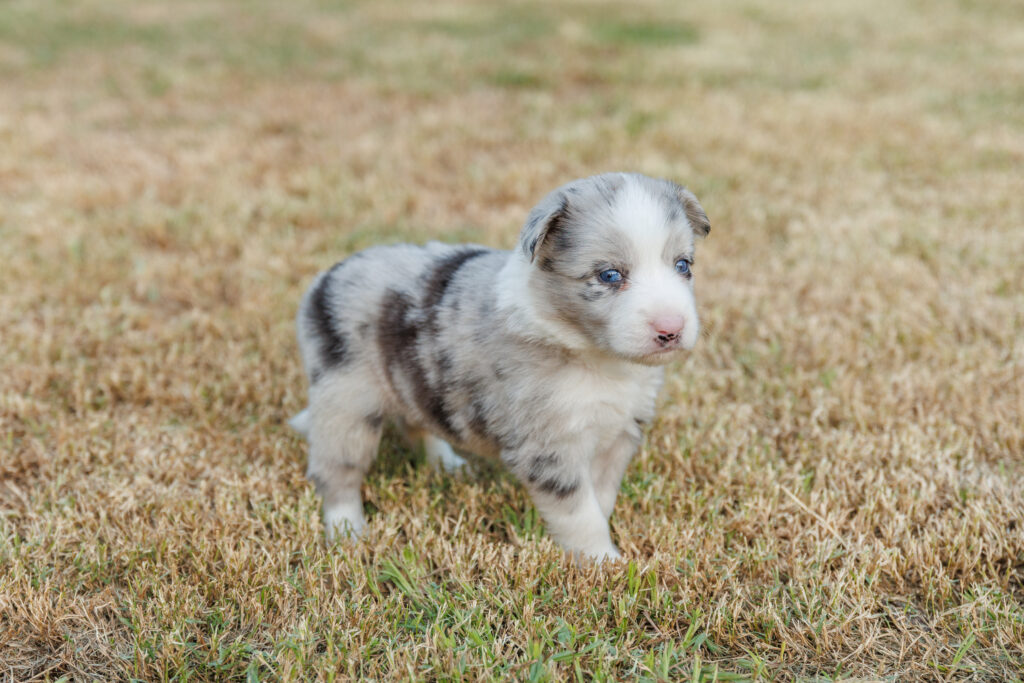
Blue Merle
Visual description: Grey and black marbled coat, often described as blue-toned.
Genetic base colour: Black-based with the merle gene.
Why it looks this way: The merle gene dilutes black pigment into varying shades of grey and blue.
How we describe this colour publicly: Blue Merle (black-based)
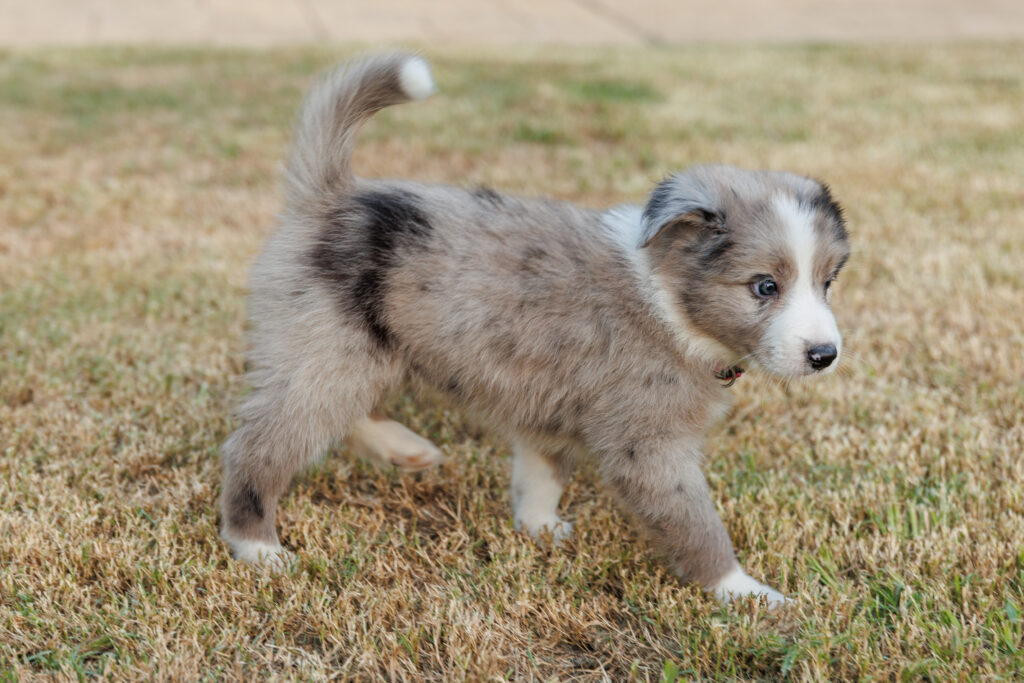
Slate Merle
Visual description: Soft grey merle with muted contrast.
Genetic base colour: Black-based + merle.
Why it looks this way: Merle combined with modifying genes softens black pigment into slate/grey tones.
How we describe this publicly: Slate Merle (black-based)
Chocolate Merle
Visual description: Brown-toned merle with warm chocolate colouring.
Genetic base colour: Black-based + merle + warm coat modifiers.
Why it looks this way: Merle affects pigment while warmth modifiers influence brown expression.
How we describe this publicly: Black-based Merle with chocolate tones
Lilac Merle
Visual description: Merle coat with pale lilac or silvery cast.
Genetic base colour: Black-based + merle + coat colour modifiers.
Why it looks this way: Merle combined with undercoat and pigment modifiers creates a lilac appearance.
How we describe this publicly: Black-based Merle with lilac tones
Red Merle
Visual description: Warm red, copper, or tan-toned merle pattern with lighter marbling and white markings. Nose pigment may be brown rather than black.
Genetic base colour: Red-based (ee) + merle gene.
Why it looks this way: The red (recessive extension) gene removes black pigment, while the merle gene creates the mottled pattern by lightening areas of the coat. Because no black pigment is present, red merles express warm red and cream tones rather than grey or blue.
How we describe this publicly: Red Merle (red-based)
Merle patterning affects pigment distribution only and does not indicate coat base colour. Red merles are genetically distinct from black-based merles.
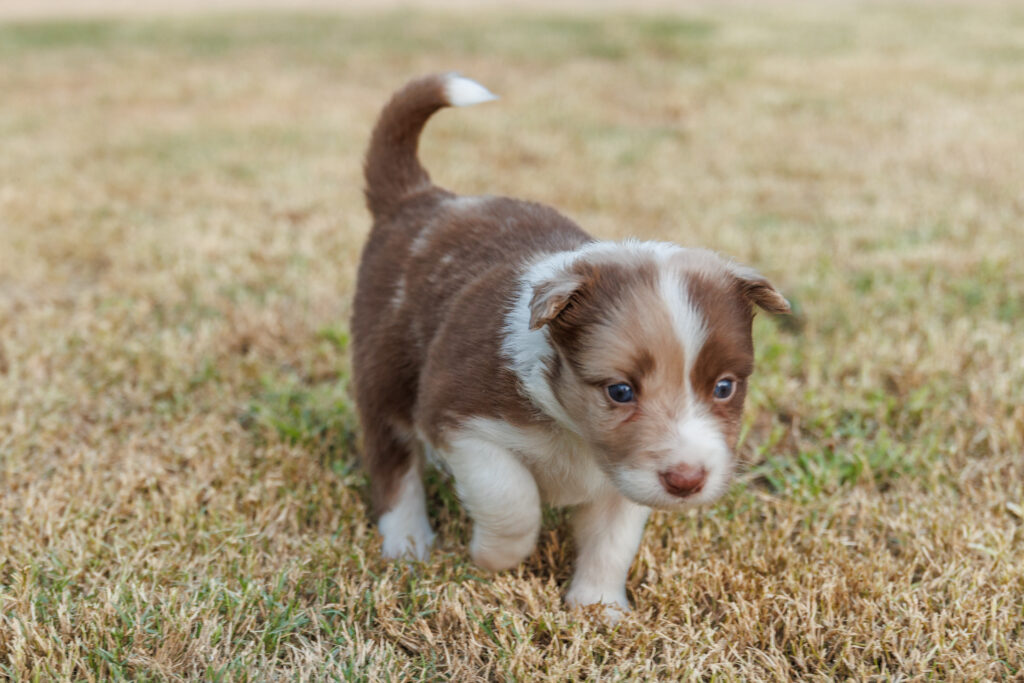
Chocolate & White
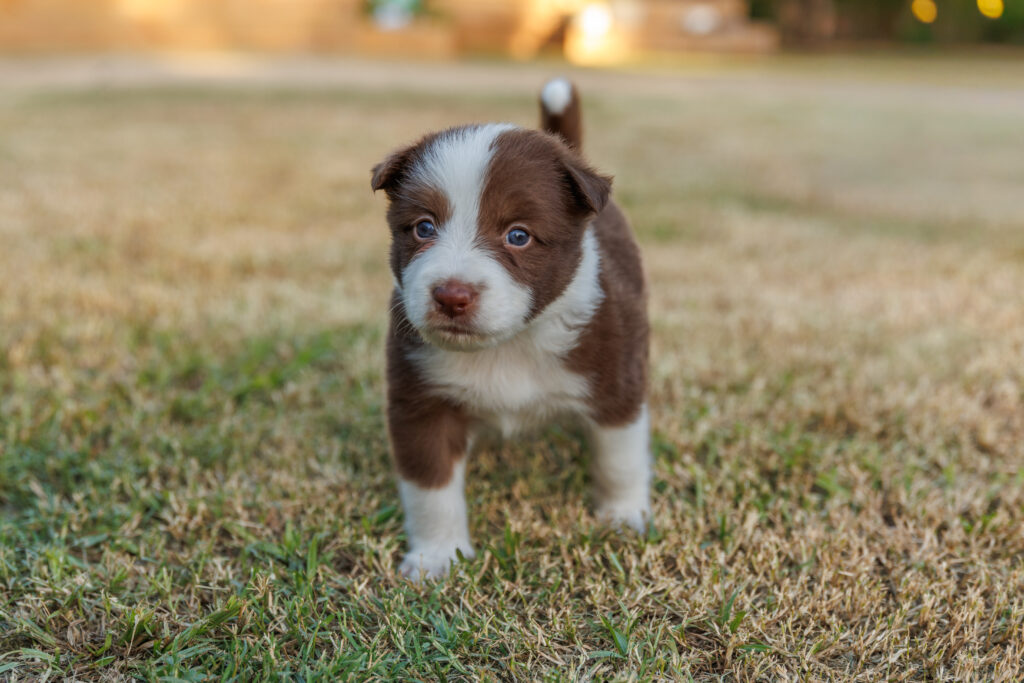
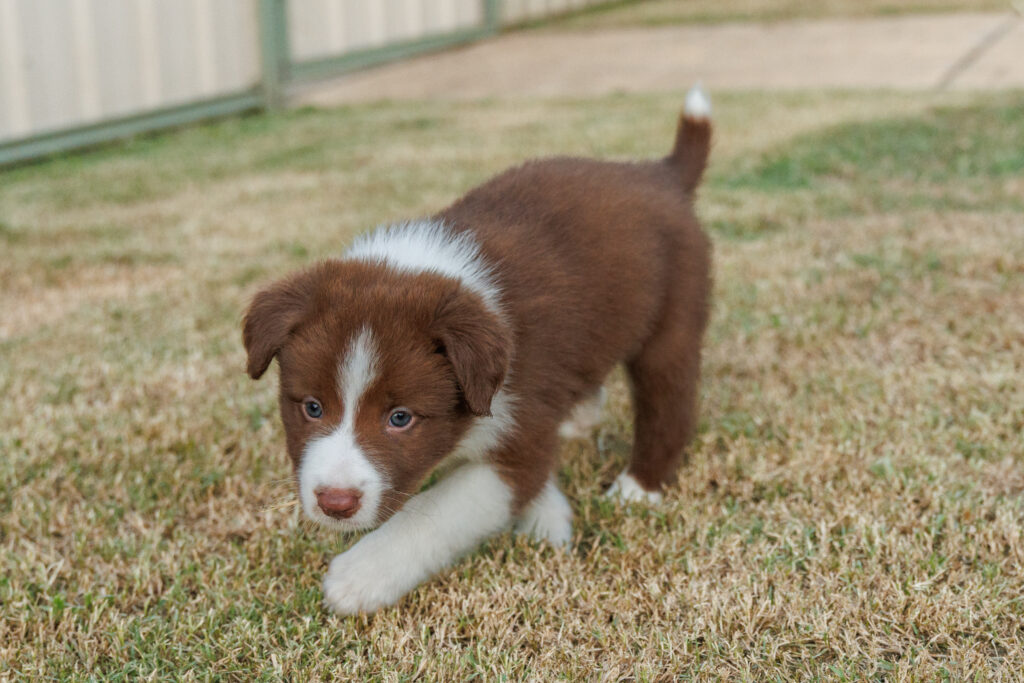
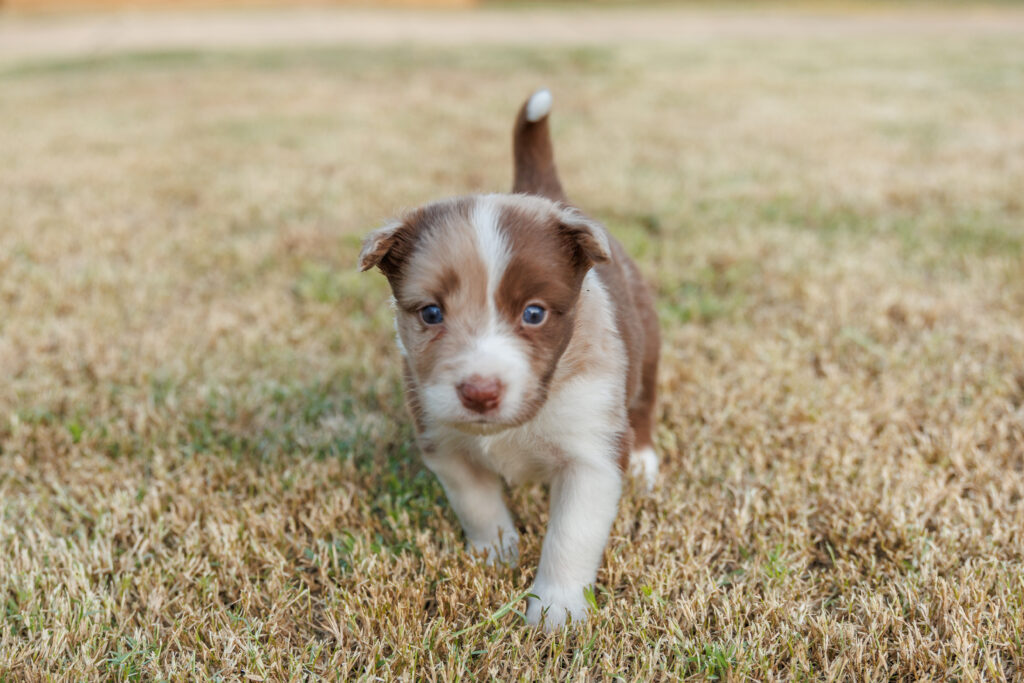
Visual description: Brown and white coat, ranging from light to medium chocolate.
Genetic base colour: Black-based + white spotting + warm coat modifiers.
Why it looks this way: Warm modifiers influence the expression of brown pigment.
How we describe this publicly: Black-based & white with warm brown tones
Dark Chocolate & White
Visual description: Deep, rich chocolate and white.
Genetic base colour: Black-based + white spotting + strong warmth modifiers.
Why it looks this way: Higher rufous polygenes deepen brown pigmentation.
How we describe this publicly: Black-based & white (dark brown tones)
Light Chocolate & White
Visual description: Lighter brown and white coat.
Genetic base colour: Black-based + white spotting + mild warmth modifiers.
Why it looks this way: Reduced pigment density results in lighter brown tones.
How we describe this publicly: Black-based & white (light brown tones)
Lilac & White
Visual description: Pale taupe or silver-lilac coat with white markings.
Genetic base colour: Black-based + white spotting + dilution gene + chocolate modifiers.
Why it looks this way: The combination of dilution and chocolate modifiers lightens pigment further, creating lilac tones.
How we describe this publicly: Lilac & white (black-based dilute)
Red & White
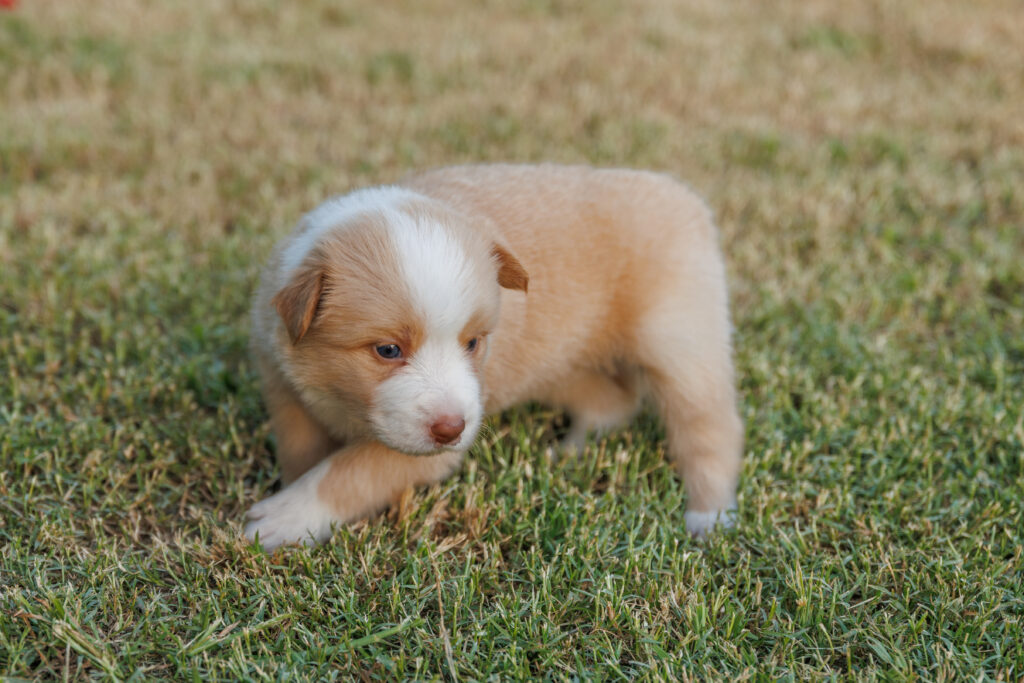
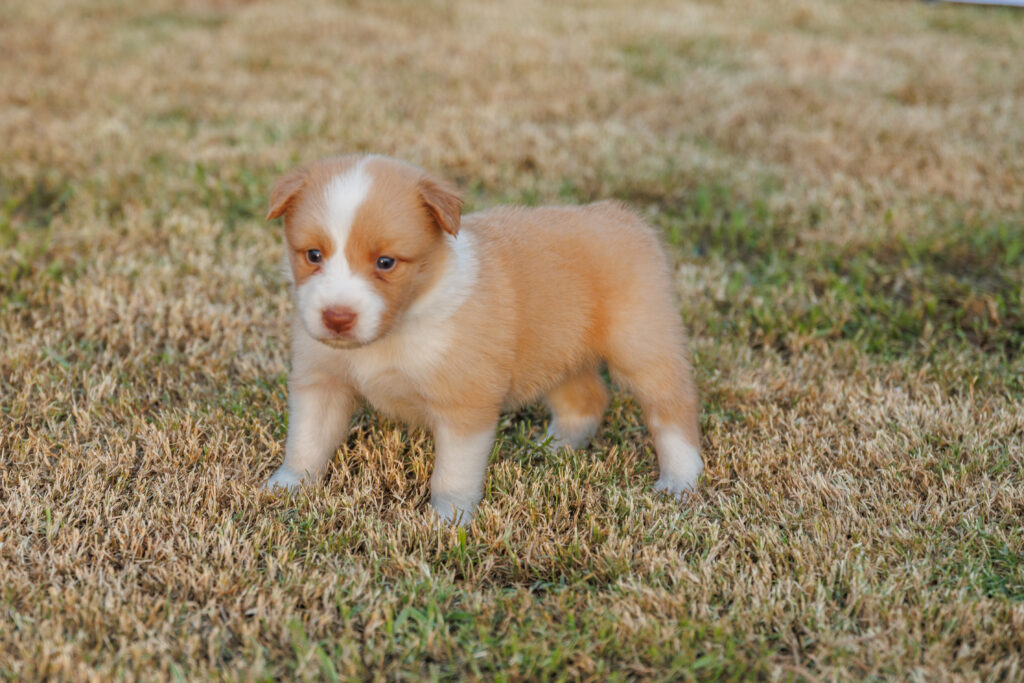
Visual description: Rich red or copper-toned coat with white markings.
Genetic base colour: Black-based + white spotting + strong rufous modifiers.
Why it looks this way: High-intensity rufous polygenes suppress black pigment expression, producing deep red tones.
How we describe this publicly: Red & white (black-based)
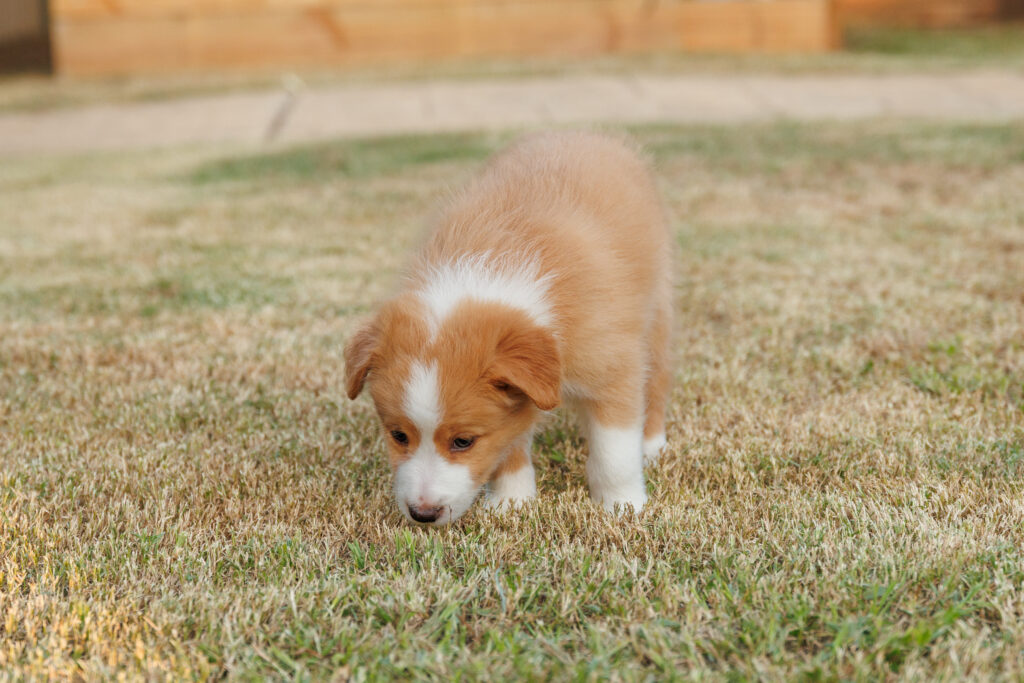
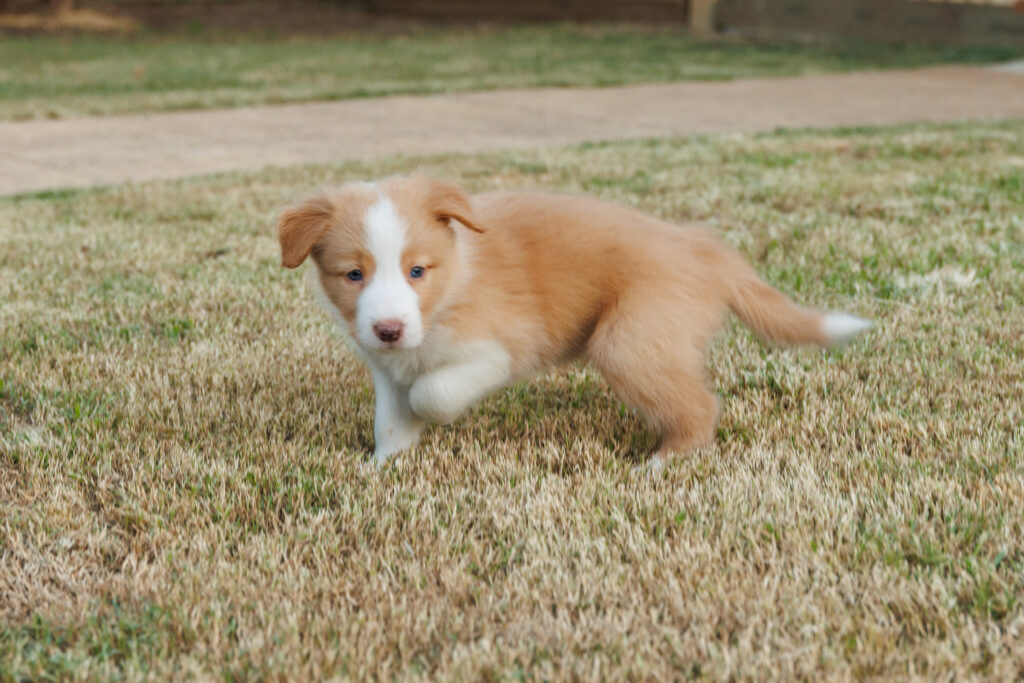
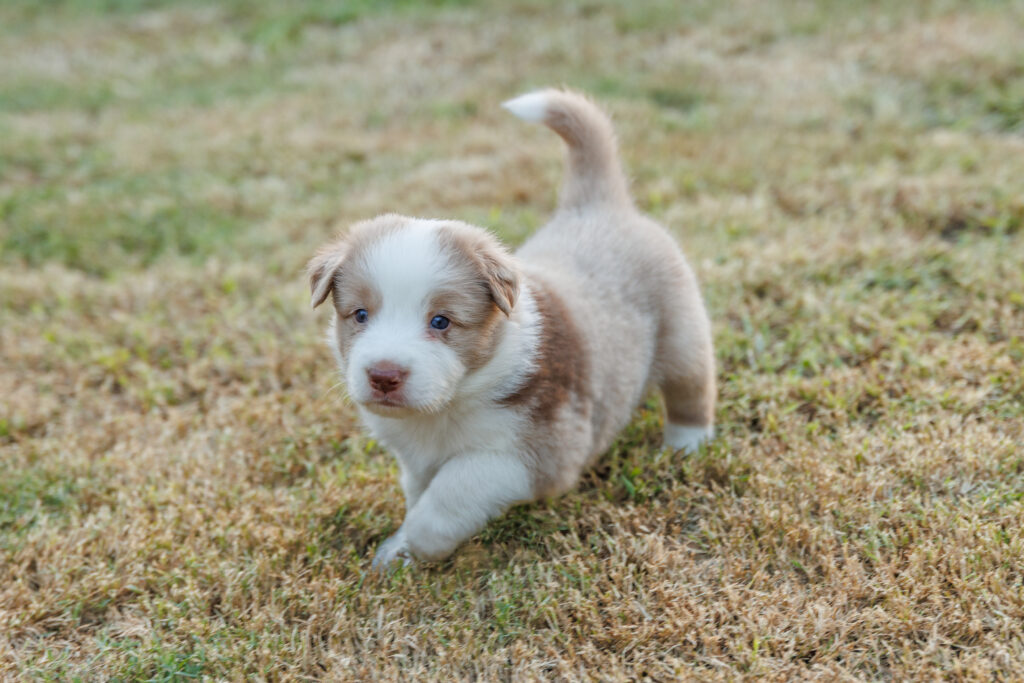
Apricot & White
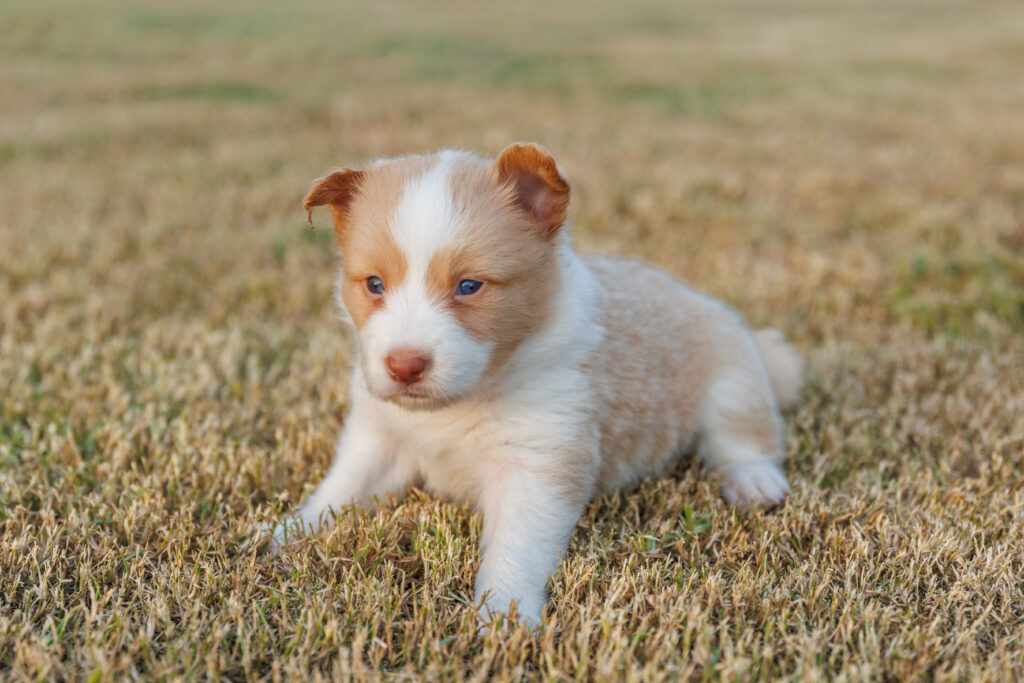
Visual description: Soft apricot or peach-toned coat with white.
Genetic base colour: Black-based + white spotting + lighter rufous modifiers.
Why it looks this way: Lower-intensity warm pigment expression results in apricot tones rather than deeper gold.
How we describe this publicly: Apricot & white (black-based)
Golden & White
Visual description: Warm golden or honey-toned coat with white markings.
Genetic base colour: Black-based + white spotting + rufous modifiers.
Why it looks this way: Moderate rufous polygenes create a golden overlay on the coat.
How we describe this publicly: Golden & white (black-based)
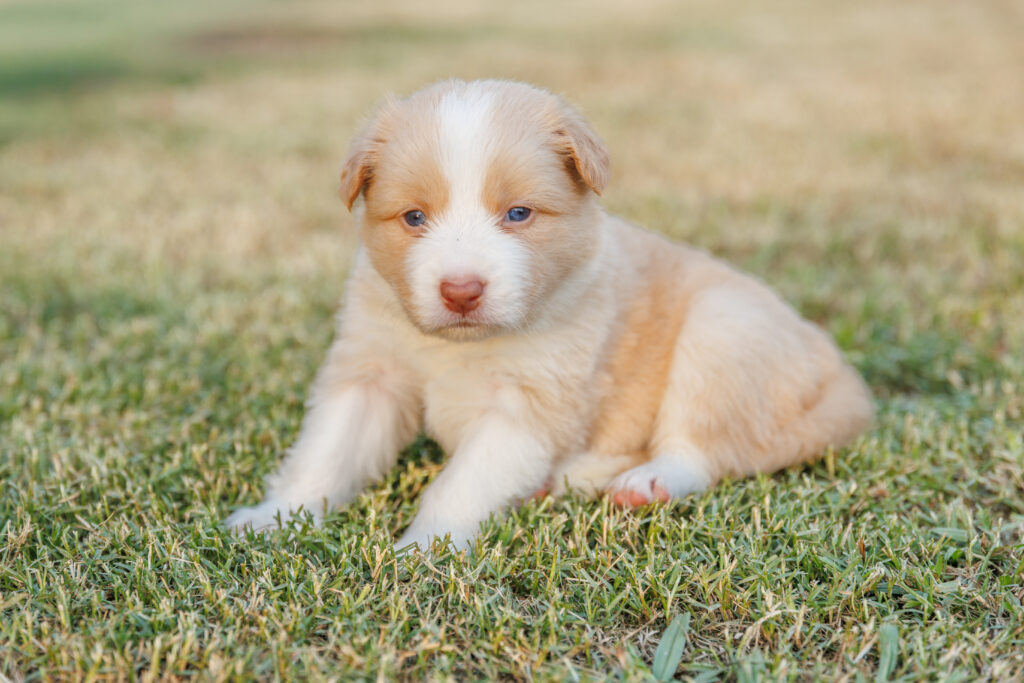
Wheaton & White
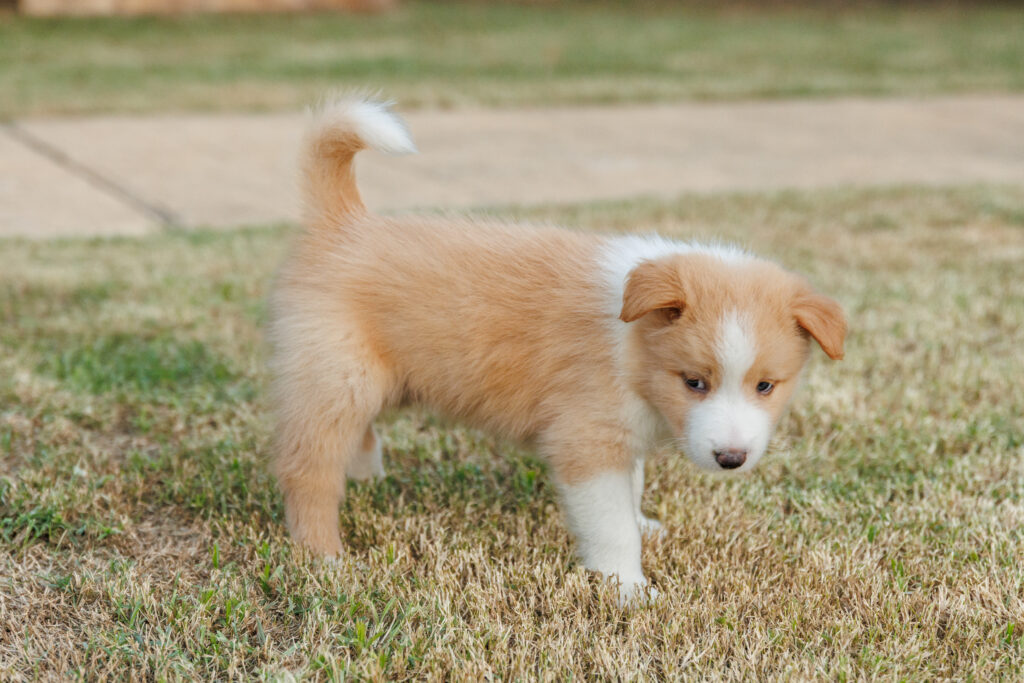
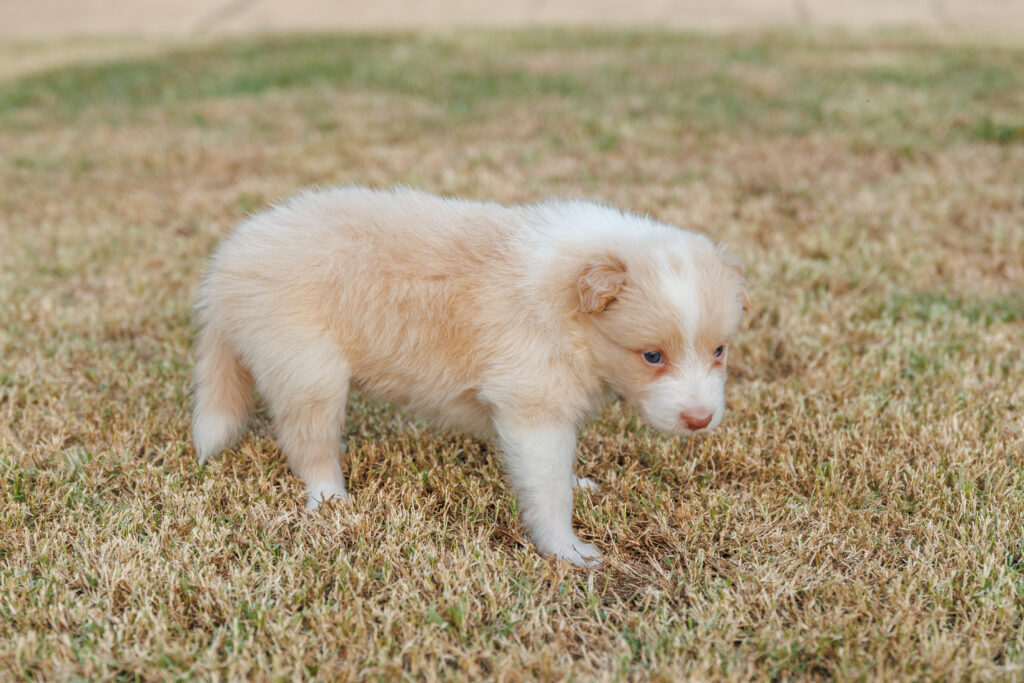
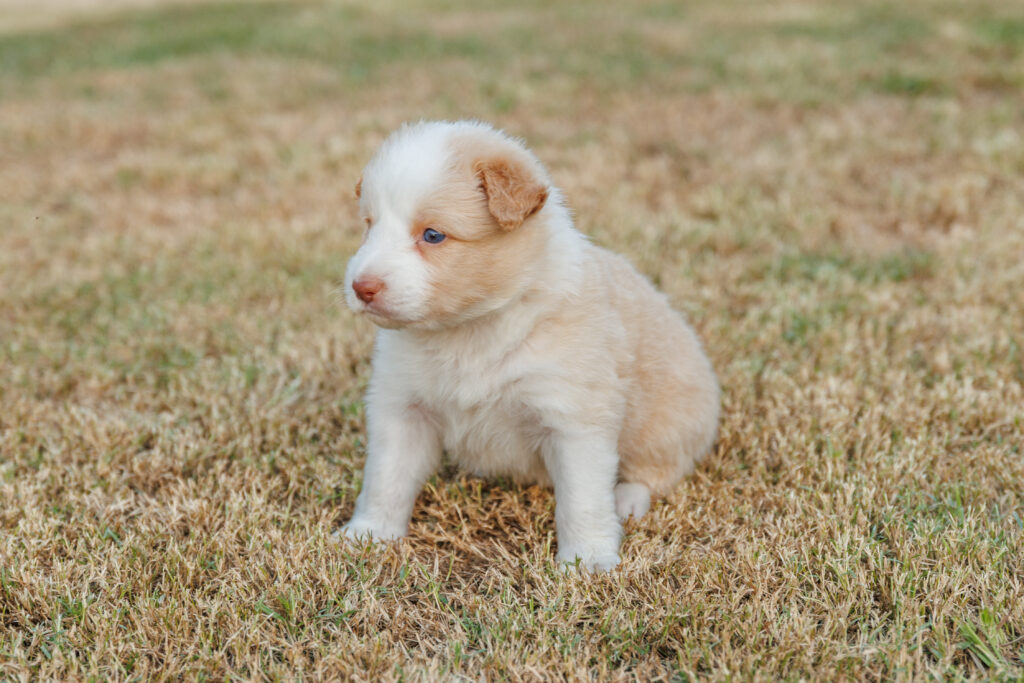
Visual description: Soft pale cream or wheaten colouring with white.
Genetic base colour: Black-based + white spotting + soft rufous modifiers.
Why it looks this way: Low-intensity warm pigment expression.
How we describe this publicly: Wheaten & white (black-based)
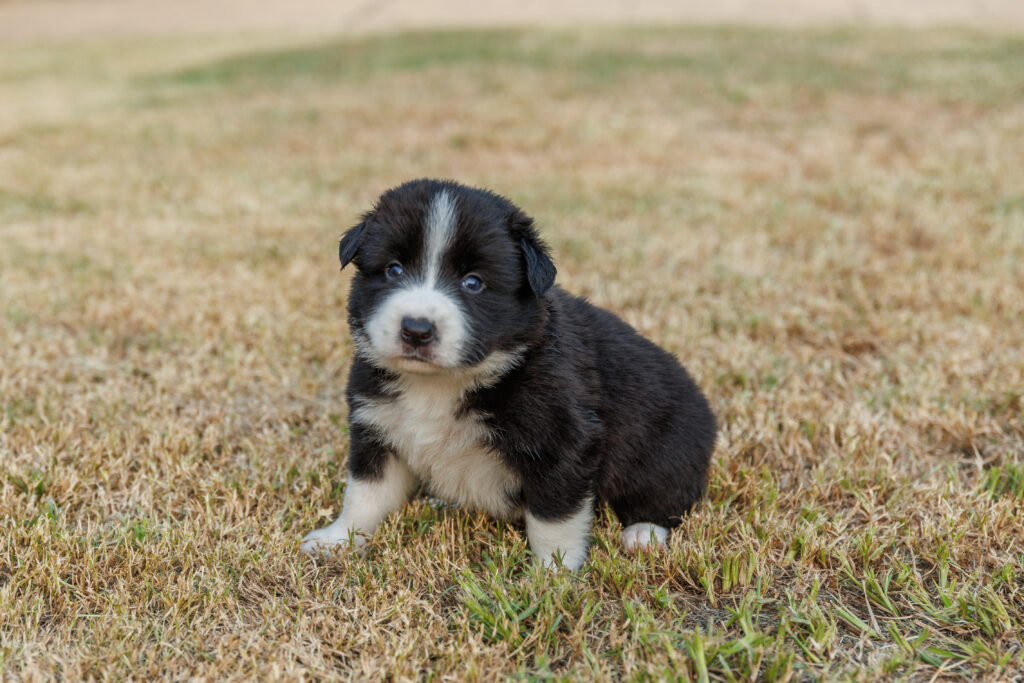
Black & White
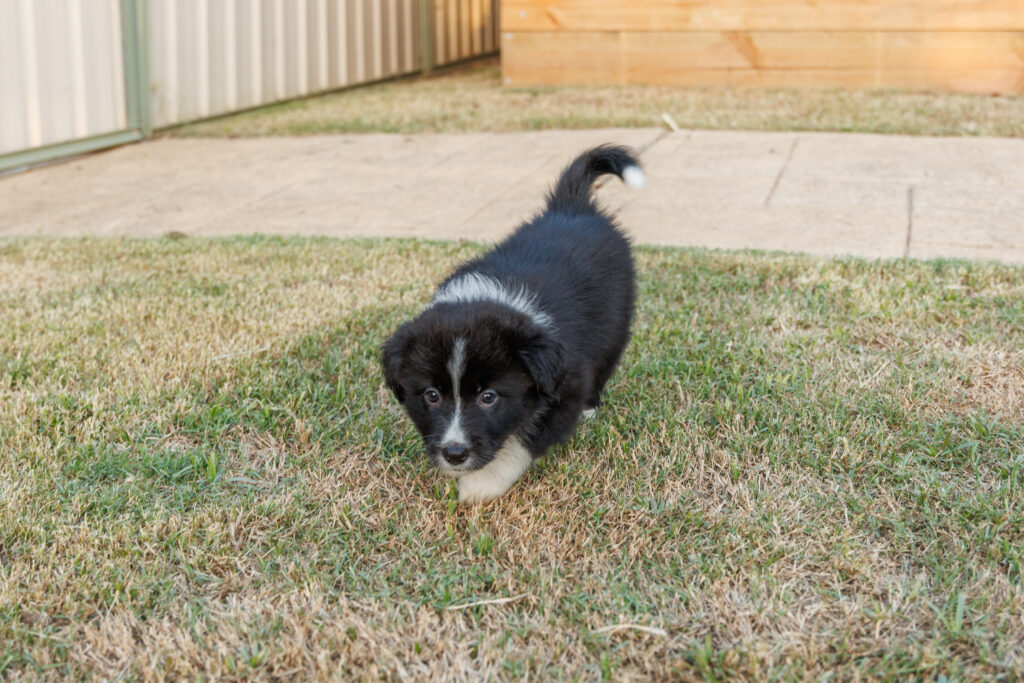
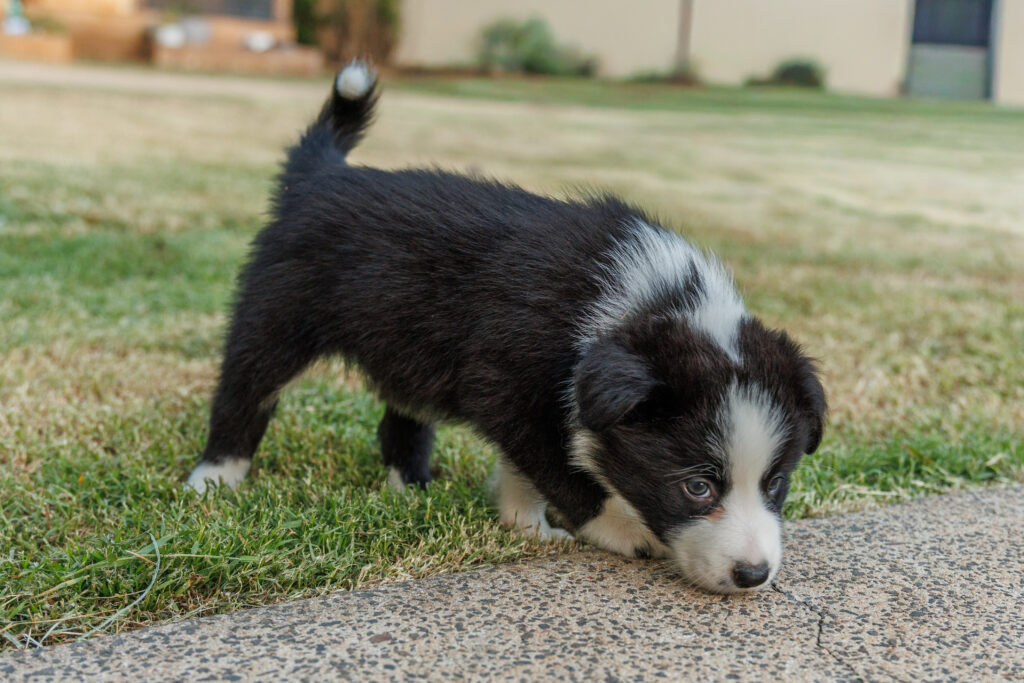
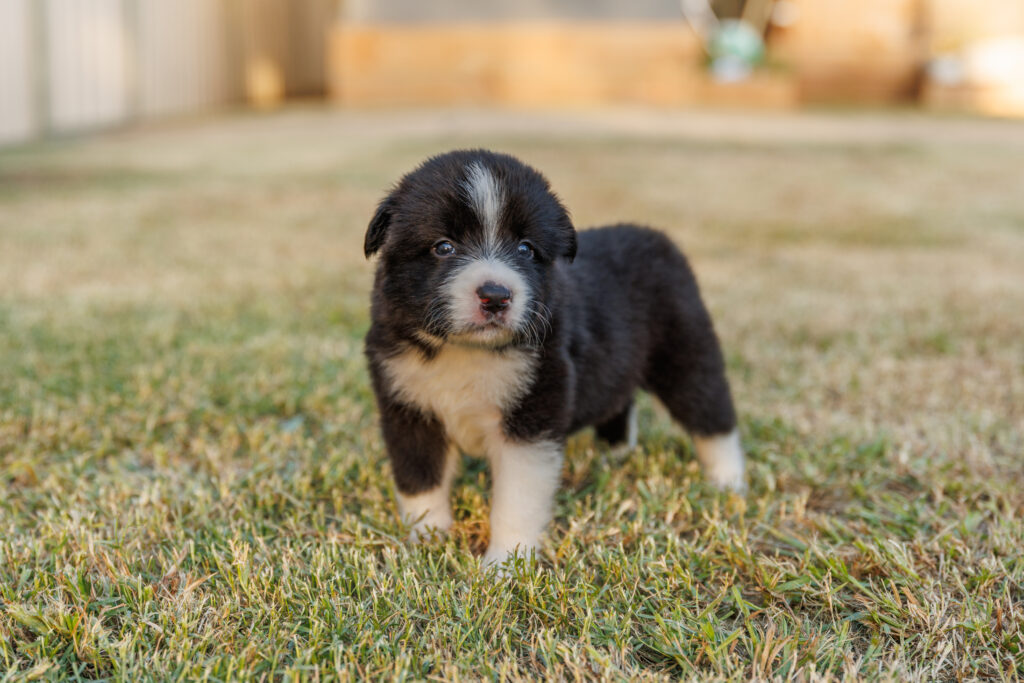
Visual description: Traditional black and white Border Collie pattern.
Genetic base colour: Black-based + white spotting.
Why it looks this way: Standard pigment expression without dilution or warmth modifiers.
How we describe this publicly: Black & white
Blue & White
Visual description: Cool grey-blue coat with white markings.
Genetic base colour: Black-based + white spotting + dilution gene.
Why it looks this way: The dilution gene reduces black pigment intensity, resulting in a blue/grey appearance.
How we describe this publicly: Blue & white (black-based dilute)
Tri Colour
Visual description: Black and white coat with tan or copper points (typically on face, legs, and under-tail).
Genetic base colour: Black-based + white spotting + tan-point gene.
Why it looks this way: The tan-point gene allows secondary pigment expression alongside black and white.
How we describe this publicly: Tri colour (black-based)
Eye Colour
Visual description: Green, blue, or mixed eye colour.
Genetic base: Eye pigment variation (often associated with merle).
Why it looks this way: Merle affects pigment distribution in the eyes.
How we describe this publicly: Green/blue eyes (may change with age)
All colour descriptions are based on observed phenotype. Genetic colour, modifiers, and expression may vary, and coat colour can change as puppies mature.
Common Questions
Does carrying a gene mean a dog is unhealthy?
No. A carrier is not affected by the condition and remains healthy. Carrier status is only relevant when selecting breeding pairings.
Why disclose colour and genetic information?
Transparency allows puppy buyers to understand how responsible breeding decisions are made and supports confidence in the long-term health and welfare of our dogs.
Genetic Health Testing
All Scenic Collies breeding dogs are DNA tested through Orivet, including the full Border Collie breed-specific panel where applicable.
DNA testing allows us to identify dogs that are genetically clear, carriers, or affected for known inherited conditions and to plan pairings that avoid producing affected puppies.
Full DNA reports are available on request.
Understanding Carrier Status
A carrier is a dog that has one normal copy of a gene and one copy of a known genetic variant. Carrier dogs are clinically healthy and do not develop the associated condition.
Carrier status is safely managed through informed pairing selection.
When a carrier dog is bred to a genetically clear mate:
- No affected puppies can be produced
- Some puppies may themselves be carriers
- All puppies will be clinically healthy with respect to that condition
How Responsible Pairing Works
Carrier parent + genetically clear parent
↓
Healthy puppies
(no affected puppies produced)
Coat Colour Genetics Overview
Border Collie coat colour is influenced by multiple genes working together. DNA testing provides insight into potential colour outcomes but cannot guarantee exact markings or adult coat shade.
Base Colour
Black-based dogs may carry red. Red-based dogs express red colouring. Red can only be produced when both parents carry the red gene.
Merle
Merle is a dominant gene that affects coat pattern. Scenic Collies does not breed merle-to-merle. All merle pairings are carefully selected to avoid health risks associated with double merle inheritance.
Dilution
Dilution affects coat colour intensity (for example, blue or lilac). Dogs may carry dilution without expressing it. Dilute colours are only produced when both parents carry the dilution gene.
White Patterning
White patterning is assessed through both DNA results and visual evaluation. Extreme white patterning is avoided as part of responsible breeding decisions.
What DNA Testing Can — and Cannot — Predict
DNA testing can identify known inherited conditions and provide insight into potential colour outcomes. It cannot guarantee adult temperament, exact coat shade, or final markings.
Puppies continue to develop physically and behaviourally as they mature.
Breeding Decisions at Scenic Collies
Breeding decisions are never based on colour alone. Each pairing is selected using genetic health compatibility, temperament, structural soundness, and overall suitability within the program.
Colour genetics are considered responsibly without compromising health or welfare.
Transparency & Education
We believe informed families make the best long-term matches. Genetic testing results are discussed openly, and documentation is available to approved applicants upon request.
Questions regarding genetics and health testing are always welcome.
All genetic testing referenced on this page has been conducted through Orivet. Scenic Collies follows best-practice breeding principles with a focus on health, welfare, and responsible genetic management.